

Language and currency settings
Change your language and currency settings by selecting your preferences below
Select currency
Select language
Why Do We Wear the Engagement Ring on the Right Hand in Norway?

Engagement and wedding rings are among the strongest symbols of love we have. But did you know that the hand on which the ring is worn varies from country to country – and that the traditions behind it are both romantic and deeply cultural?
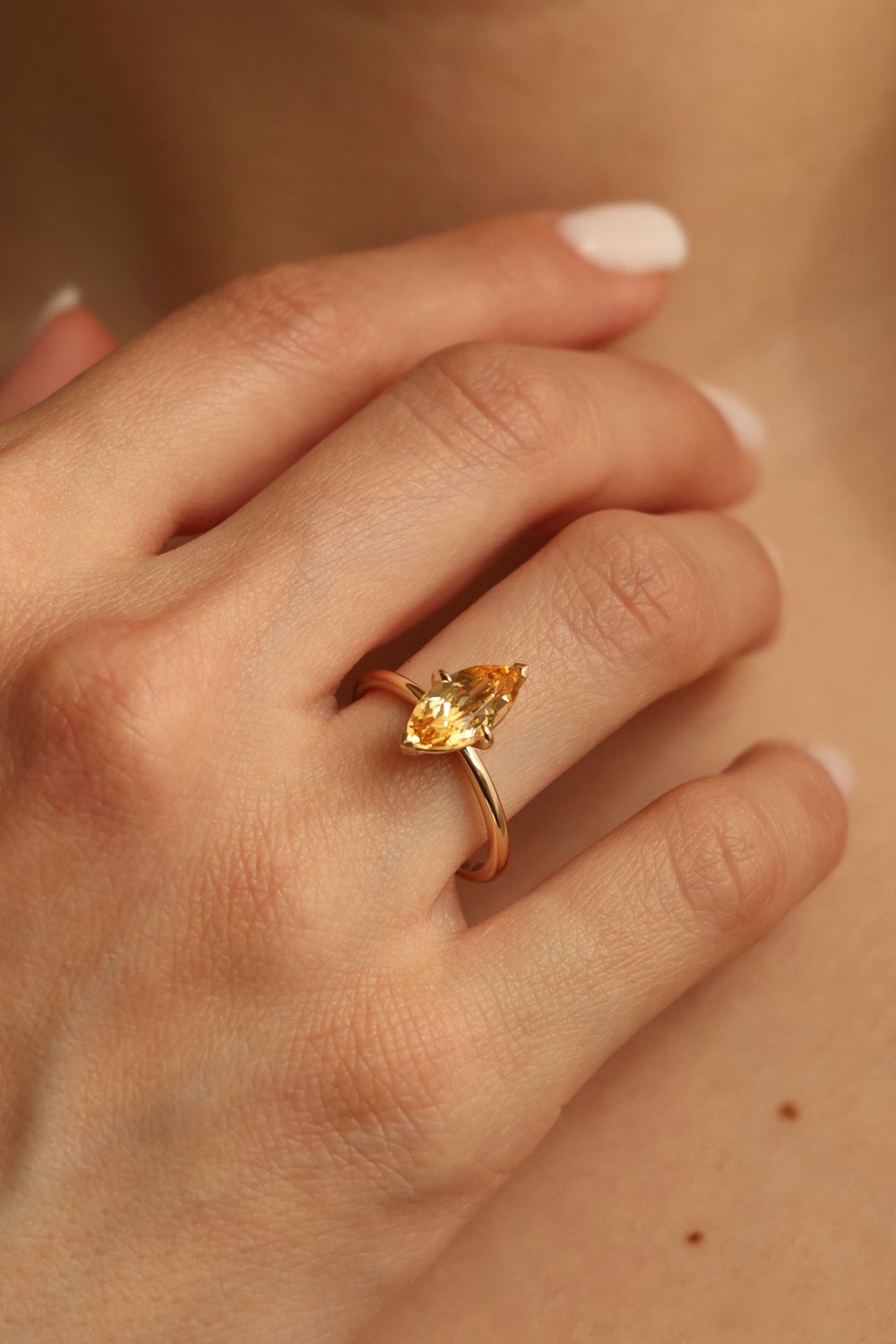
Above: Custom Engagement Ring with Colored Gemstone
The Romantic Myth of Vena Amoris
In many Western countries – such as the United States, the United Kingdom, France, and Italy – engagement and wedding rings are traditionally worn on the left hand. This custom stems from an ancient belief that the left ring finger contained a special vein, the vena amoris or “vein of love,” that led directly to the heart.
Although modern anatomy has disproven this idea, the myth has endured, making the left hand the so-called “hand of the heart” – a tradition still strong in much of the world.

Above: Diamond Engagement Rings
Norway and Scandinavia – Promises on the Right Hand
In Norway, Denmark, Germany, Austria, and several other countries in Northern and Central Europe, the tradition is different: here, engagement and wedding rings are worn on the right hand.
The explanation lies not in veins, but in culture and religion. Historically, the right hand has been seen as the “true hand” – the hand of oaths, justice, and solemn promises. When giving life’s most important vow, it is symbolically placed on the right side.
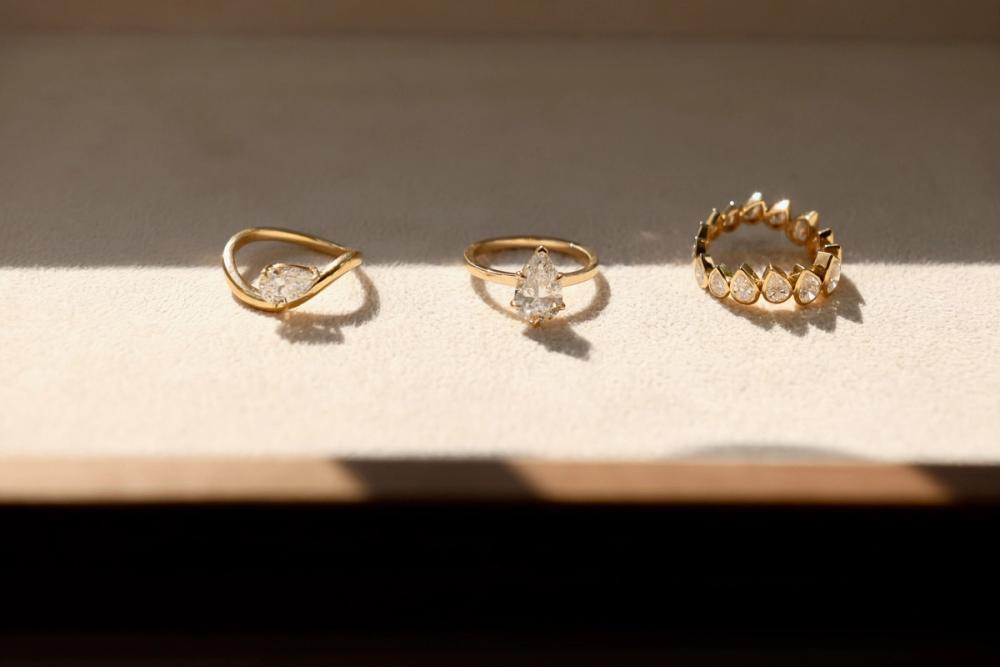
Above: Unique Diamond Rings with Pear Cut Lab-Diamond
Sri Lanka – Tradition, Faith, and Symbolism
In Sri Lanka, where many of Nangi’s gemstones originate, ring traditions are closely tied to religion and local culture.
- Among Christians, the ring is often worn on the right hand.
- In Buddhist weddings, rings may play a smaller role, with other jewellery traditions marking the union.
- Hindu weddings often include rich jewellery customs that symbolize love and togetherness, beyond just the ring.
The expression may differ, but across all traditions, jewellery stands for love, promises, and unity.
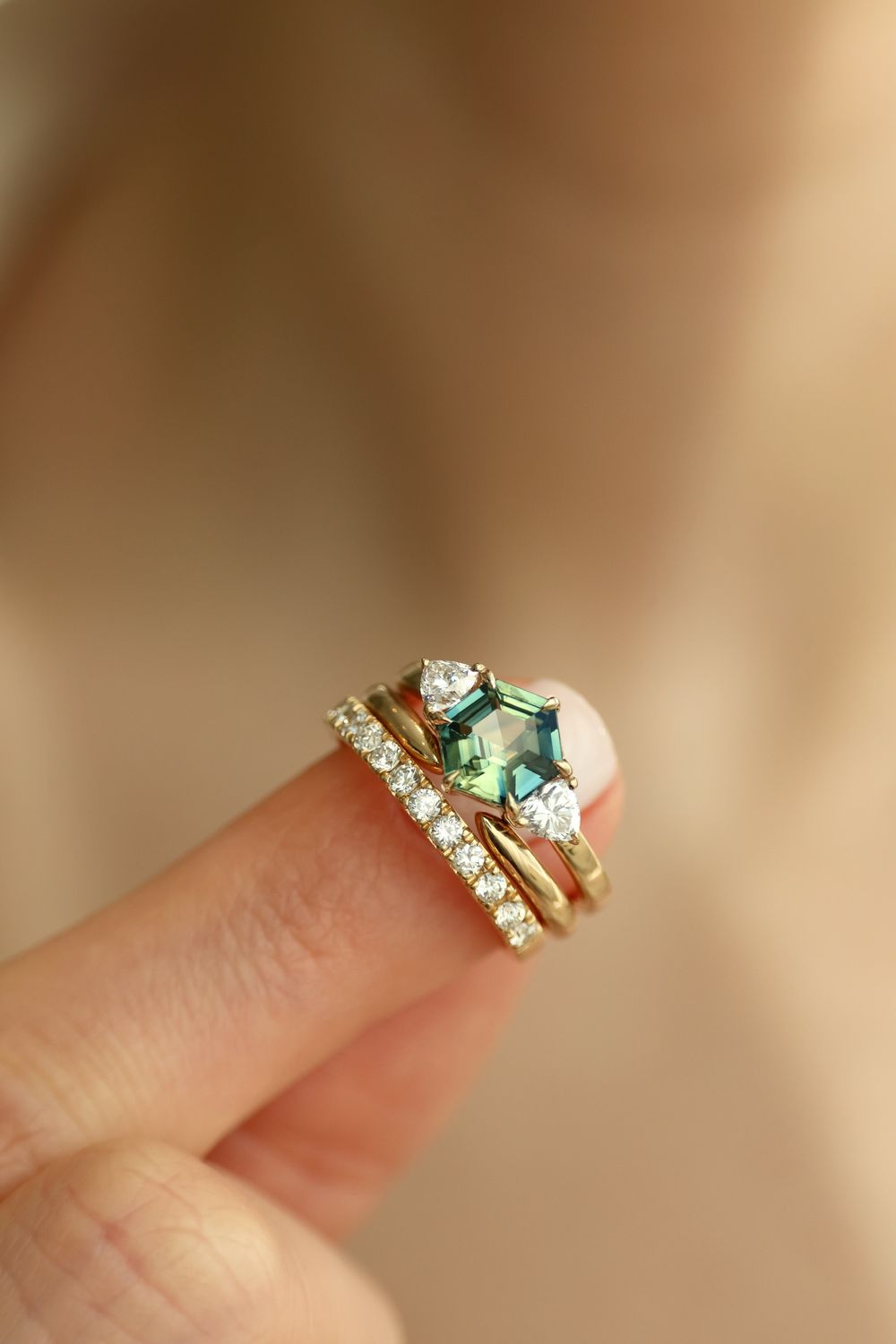
Above: Engagement Rings with Colorful Gemstones
Europe – A Diversity of Ring Customs
- Spain, Poland, Greece: The right hand is common, often with religious roots.
- United Kingdom, France, Italy: The left hand – the “hand of the heart” – remains tradition.
- Russia and Eastern Europe: The right hand dominates, especially in the Orthodox Church.
Ring traditions are therefore far from universal. They are interwoven with history, religion, and culture, reflecting the many ways love is expressed across the world.
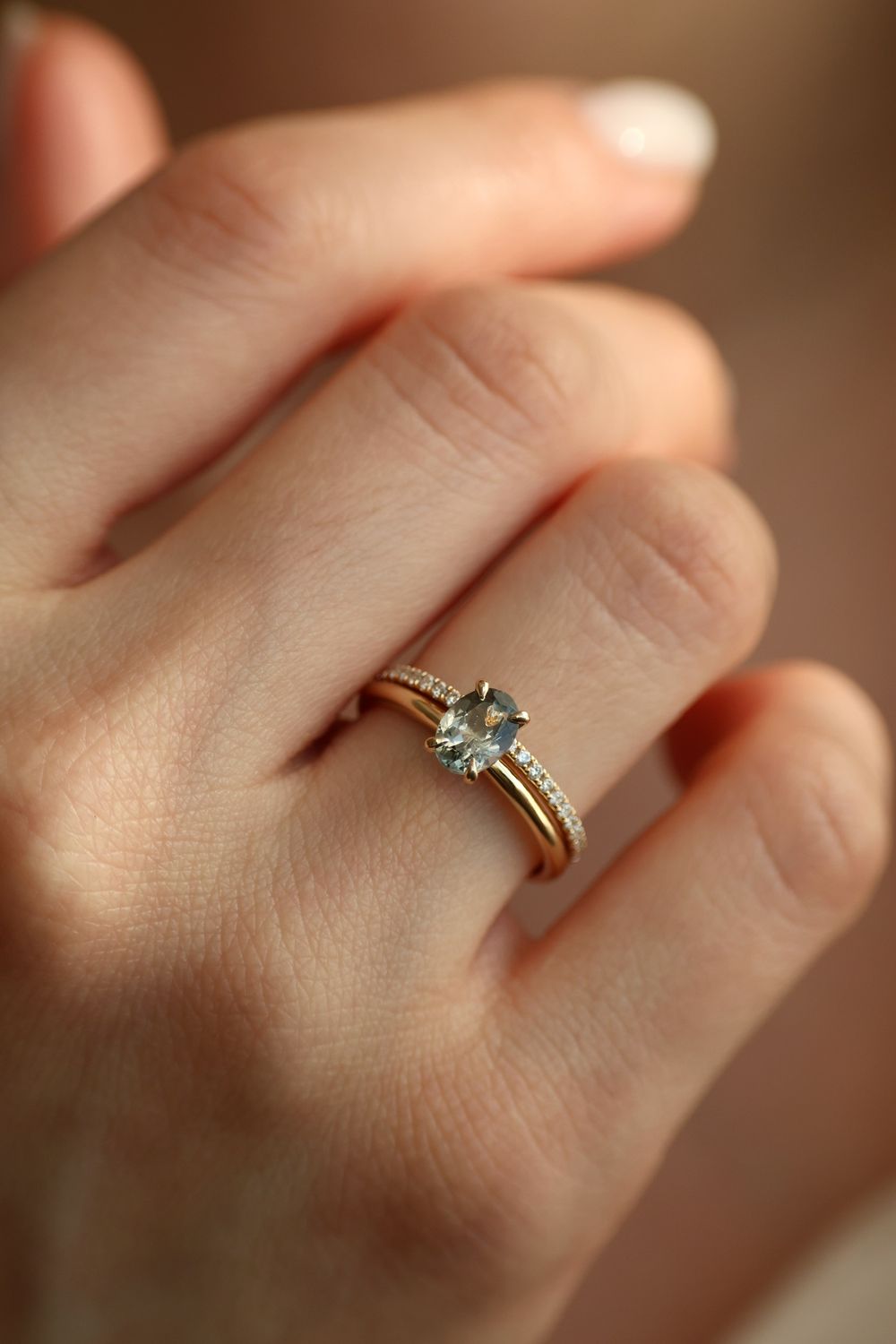
Above: Oval Sapphire Ring stacked with Diamond Band
Engagement Ring and Wedding Ring – Two Different Symbols
In Norway, the engagement ring is usually worn on the right hand from the proposal until the wedding. During the ceremony, the wedding ring may be placed on the same finger – or the engagement ring may be moved to the left hand, so both can be worn.
- The engagement ring symbolizes the promise of the future.Explore our engagement rings here.
- The wedding ring represents the vow of marriage itself. Discover our wedding rings here.
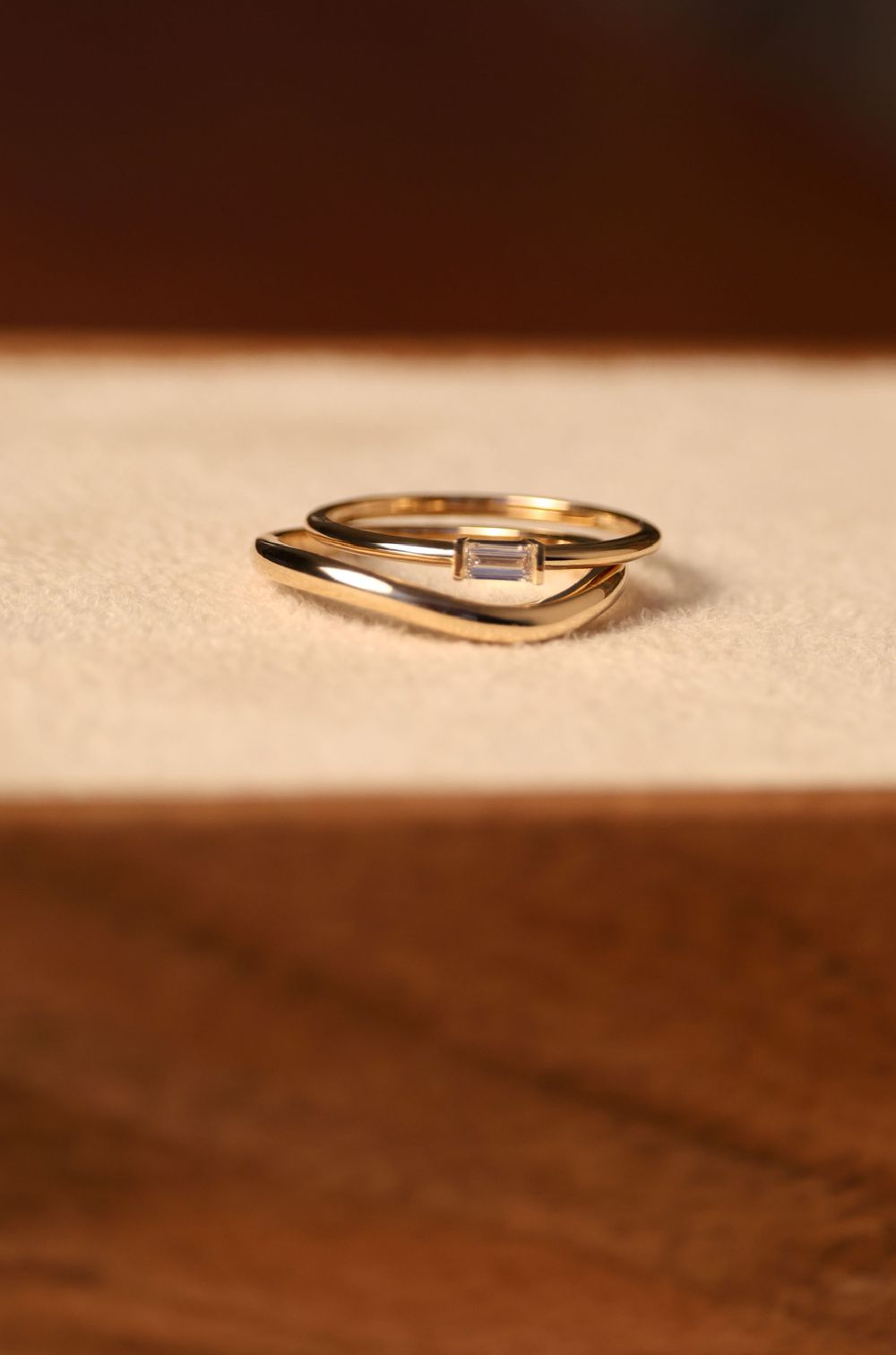
Above: Baguette Diamond Ring stacked with Wave Wedding Band
A Universal Love Story
Whether worn on the right or the left hand, the meaning remains the same: to symbolize love, unity, and a shared future.
At Nangi, we love that such a small symbol can hold so much history – both personal and cultural. When you wear a ring, you are not simply wearing a piece of jewellery. You are carrying a story that has travelled across continents and generations – and that now becomes part of your own.
Join the Nangi family!
Read similar posts



Join the Nangi family!
Subscribe to our newsletter to be the first to know when we release new one-of-a-kind pieces, and gain exclusive access to archive sales and events
Norsk side
Nangi Fine Jewelry © 2024