

Language and currency settings
Change your language and currency settings by selecting your preferences below
Select currency
Select language
Recycled Gold – An Honest Look Behind the Label

Is it truly a sustainable choice—or just the latest slogan in a greenwashed industry? Many jewelry brands present it as a mark of quality, and it’s easy to see why. We all want to choose materials that are better for people and the planet. But when we look closely at the research, the picture is more complex than the marketing suggests.
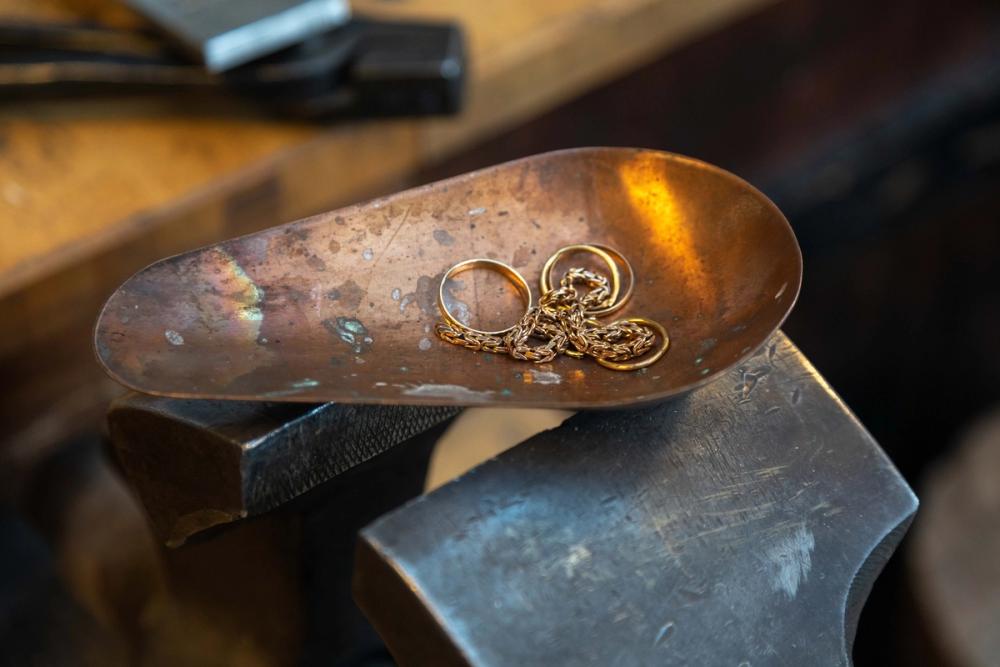
Is “recycled gold” actually something new?
Gold never disappears—it’s simply remelted. Jewelry is inherited, sold, and remade, which means most of the world’s gold is already in circulation. In fact, about 85 percent of all gold ever mined is still in use (Norgate and Haque 2012). So when brands present “recycled gold” as a green badge, it’s worth asking: is this a true sustainability breakthrough—or just a new label for a very old practice?
Not all recycled gold is the same
When we talk about “recycled gold,” the source matters:
- Jewelry and production scrap: Gold that is already pure or near-pure and can be remelted with minimal energy. This has the lowest emissions.
- Electronic waste (WEEE): Circuit boards, phones, and chips contain gold in tiny amounts mixed with other metals. Recovering it requires far more chemicals and energy. Emissions are significantly higher than for jewelry scrap—but still lower than new mining.
Research indicates that remelting existing jewelry can result in up to 90% lower emissions than mined gold, while gold recovered from electronics sits somewhere in between (Fritz, Aichele, and Schmidt 2020, 1938–39). You’ll also see the term “reclaimed” gold—gold taken directly from old jewelry or production surplus. It travels a short path from furnace to finished piece, with high traceability and very little processing. All reclaimed gold is recycled, but not all recycled gold is reclaimed.
Where is the gold processed—and what powers it?
It’s not only the feedstock that counts; what happens next matters too. A life-cycle study from China shows that the carbon footprint of gold mining can be reduced by over 60 percent when coal power is replaced with hydropower (Chen et al. 2018, 148–49). The same logic applies to recycling: remelting gold in a country like Norway—where electricity is almost entirely renewable—has a very different footprint than processing linked to coal or gas.
The myths of “green gold”
Recycled gold is often presented as an easy answer—a green stamp that reassures us. Reality is more nuanced. Gold never leaves the loop; it is remelted and reshaped. Calling gold “green” solely because it’s recycled is, at best, an oversimplification. Traceability is also limited. Once gold is blended at the refinery level, it’s rarely possible to know its exact origin—whether it started as an heirloom ring or as electronic waste. Meanwhile, the footprint varies widely: remelting jewelry has very low emissions, whereas gold from electronics requires more energy and chemicals. And in the background, large-scale mining continues—with heavy impacts on ecosystems and communities. In short, the “green gold” story often hides a far more complex reality.
What we do at Nangi
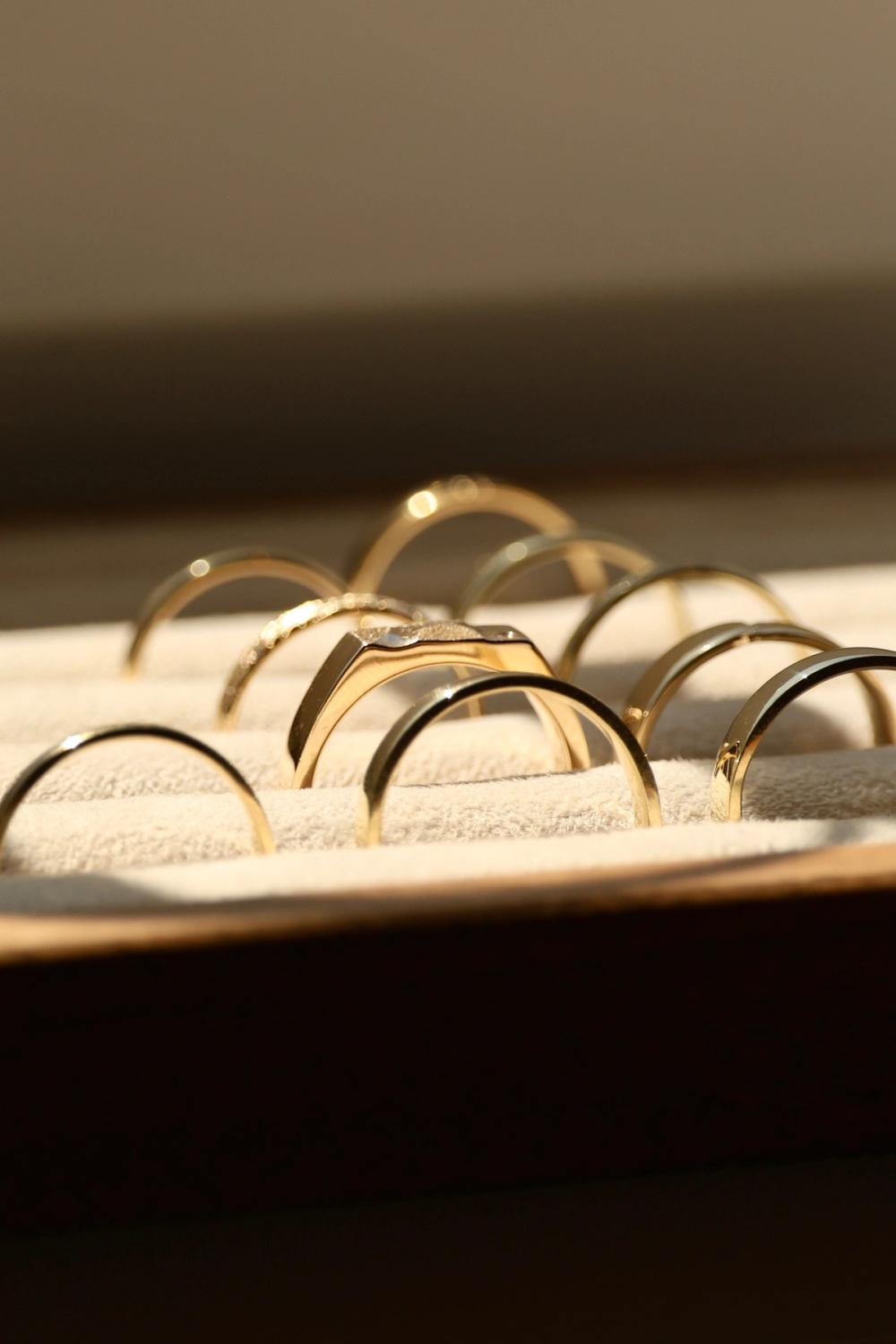
At Nangi, we choose openness over a perfect story. We use recycled gold for our wedding bands made in Bergen, with production we can follow closely and powered by renewable energy. That gives us a value chain we can stand behind—even if it can never be entirely flawless. We also offer to remake your own gold. That reduces the footprint while adding an intimate layer of meaning. A ring made from a mother’s or grandmother’s gold becomes more than a piece of jewelry—it becomes a bond across generations. For us, recycled gold isn’t a label; it’s a way to create something that both matters and lasts.
Give new life to old gold
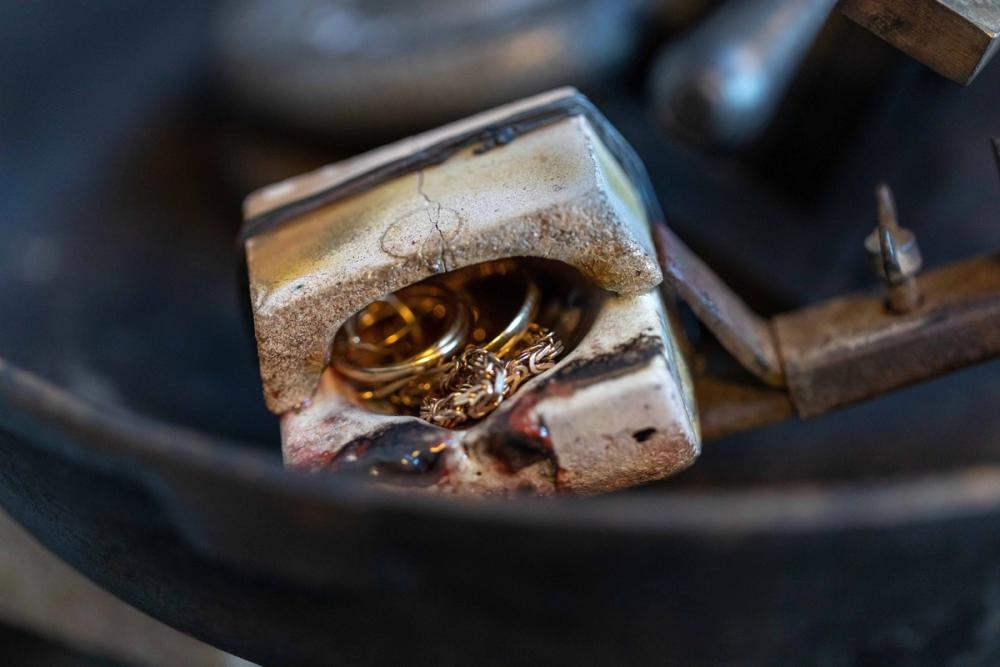
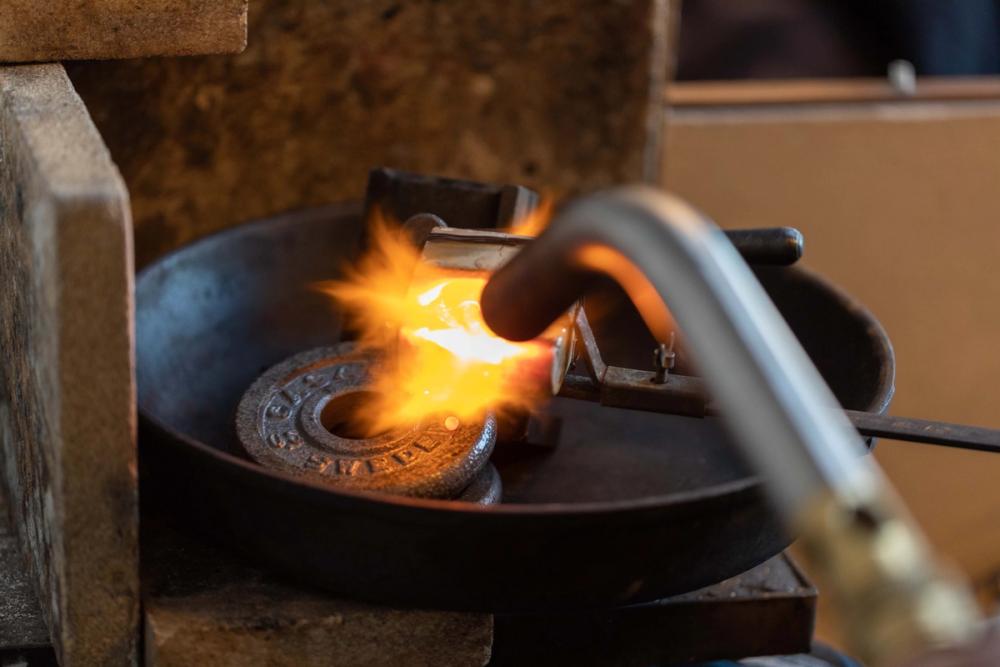
We want recycling to feel both simple and personal. Bring us heirlooms that aren’t quite “you,” broken chains tucked away in a drawer, or a ring ready for a second life. We deduct the value of your gold from your new Nangi piece—lowering the need for new mining, saving you money, and giving old gold a beautiful future. Our goldsmiths weigh and assess your gold, and you receive the value based on the current gold price. That amount is deducted from your new design—or issued as a gift card if you prefer to wait. The process is easy, safe, and thoughtful—so the piece you end up with is not only beautiful, but also carries a story.
For us, this is one of the most meaningful ways to work with recycled gold. Instead of gathering dust, old jewelry becomes part of something new and timeless—crafted to last a lifetime.
Jewelry with meaning—not just shine
For us, jewelry is more than materials and numbers. It holds memories, relationships, and promises. We choose recycled gold because it’s a better option—and because it allows us to craft pieces that unite beauty and responsibility. We want to create jewelry that doesn’t just sparkle, but tells a story. A Nangi piece should be a daily reminder of love, care, and conscious choices. That’s why we speak openly—even about what isn’t perfect. We believe true value doesn’t lie in the fasade, but in the meaning.
Join the Nangi family!
Read similar posts


Join the Nangi family!
Subscribe to our newsletter to be the first to know when we release new one-of-a-kind pieces, and gain exclusive access to archive sales and events
Norsk side
Nangi Fine Jewelry © 2024