

Language and currency settings
Change your language and currency settings by selecting your preferences below
Select currency
Select language
Why Does Diamond Research Seem So Confusing?

If you’ve ever tried to understand what’s truly more sustainable—a mined diamond or a lab-created one—you’ve probably noticed how confusing it can be. One article might paint lab-grown diamonds in a negative light, using dramatic numbers and warnings, while another—perhaps written by someone who sells them—frames them as the future of ethical luxury and environmental hope.
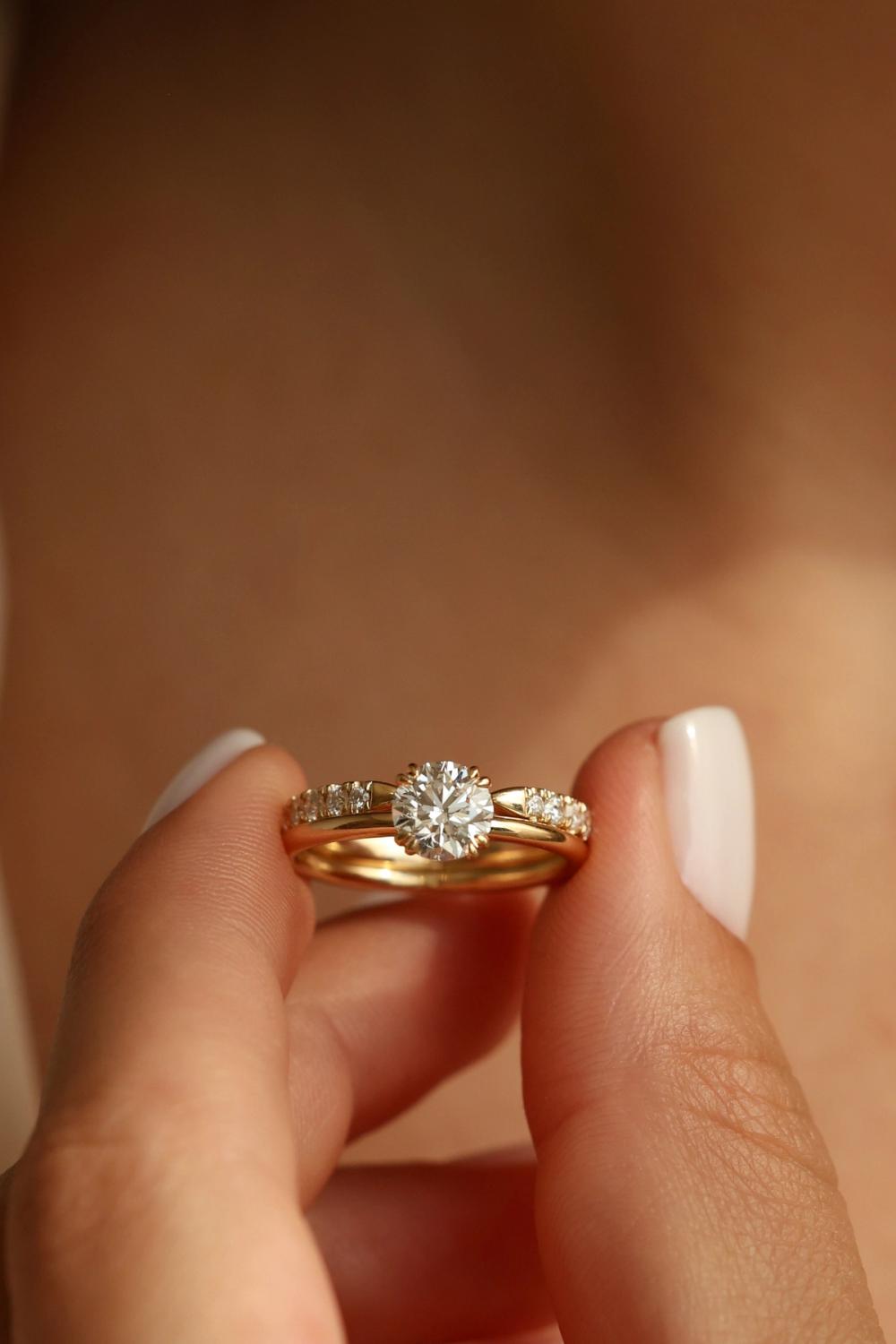
Above: Round Diamond Ring stacked with Big Diamond Snake Tail
The result? Most people are left feeling unsure. And when you’re choosing something as personal as an engagement ring or a piece of jewelry you plan to wear for life, you want your decision to feel right—both emotionally and ethically.
It’s also easy to understand why opinions in the industry can be so strong. For companies that profit from mined diamonds, there’s a lot at stake. Criticizing lab-grown diamonds isn’t always about “knowing” they’re worse—it’s often about protecting a business model in an industry undergoing major change. That’s human. No one wants to lose relevance.
So why do studies point in different directions? Why do the numbers vary so widely? And what does all of this actually mean for someone who wants to make a responsible choice that lasts?
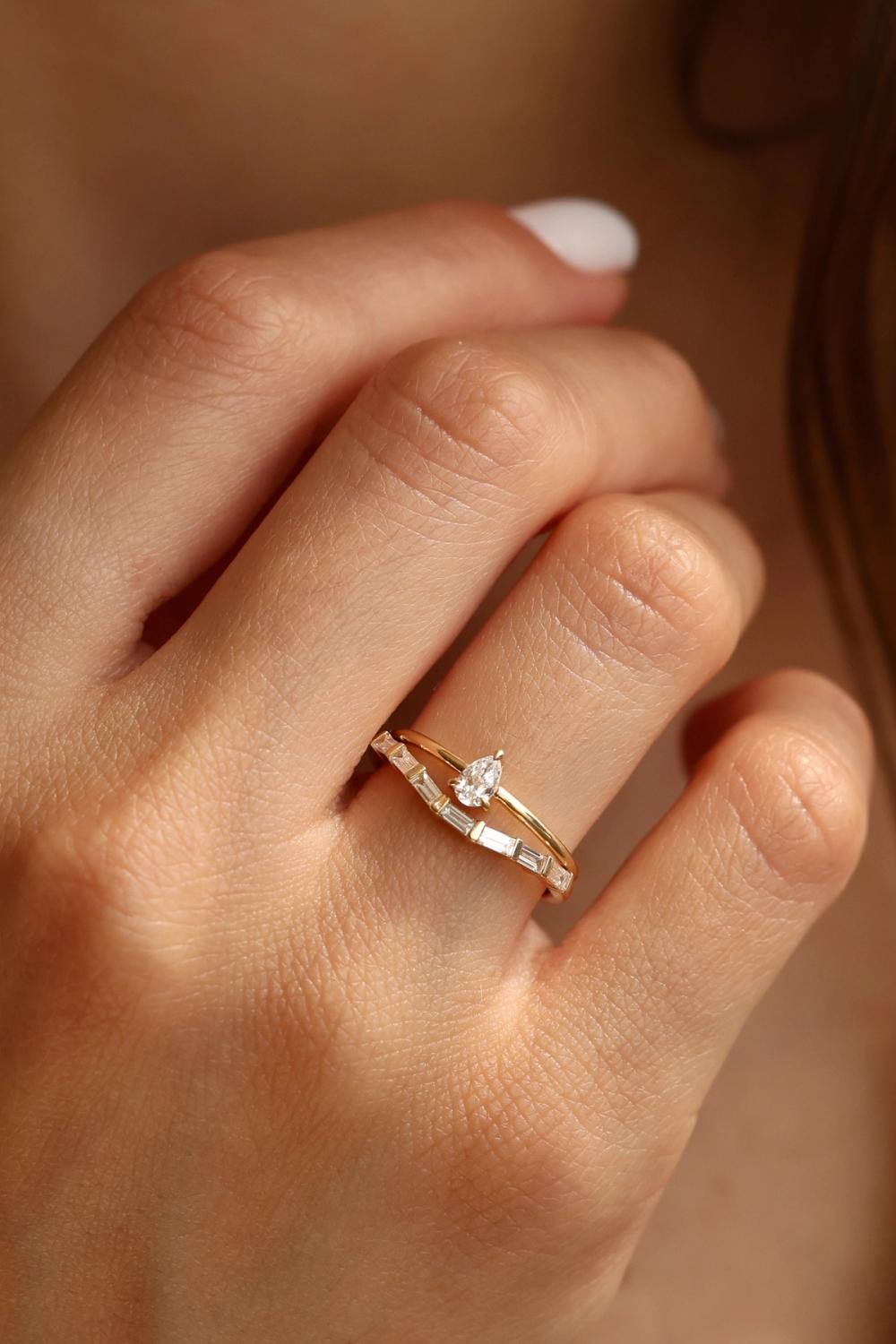
Above: Drop Diamond Ring stacked with Wave Baguette Band
When Does the Environmental Impact "Start"?
One of the main reasons research appears contradictory is that different studies don’t start measuring from the same point.
Some lifecycle assessments include everything that leads up to a mined diamond: road building, blasting, heavy machinery, worker transport, water management systems, and infrastructure (Hoang et al., 2024). Unsurprisingly, these studies show very high environmental footprints. Others begin their calculations only once a mine is already up and running—leaving out the most resource-intensive stages entirely.
The difference is significant. Studies that measure the entire lifecycle estimate that one carat of mined diamond can involve the displacement of up to two tons of earth and the use of between 6,000 and 9,000 liters of water (Earthworks, 2019; Shigley et al., 2016). In contrast, studies that start “midstream” present much milder numbers.
The same applies to lab-grown diamonds. Some studies include energy use, raw materials, and post-processing, while others only look at the growth stage itself (Jiang et al., 2025). Naturally, their results differ.
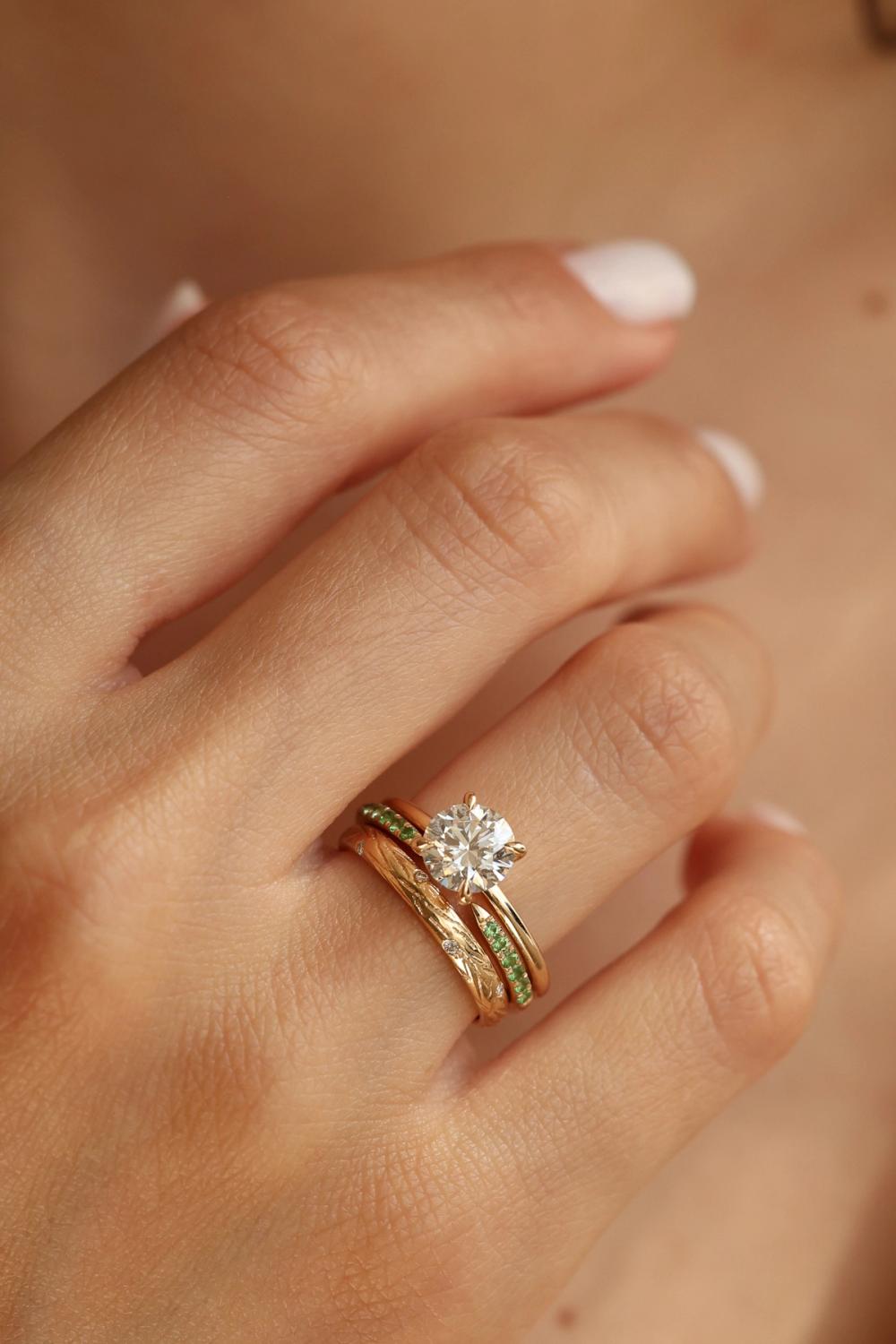
Above: Round Diamond Ring (1,50 ct) stacked with Green Snake Tail & Sparkling Textured Love Band
Numbers Can Be Correct—But Not Comparable
Another source of confusion is that different studies use different measurement methods.
Some calculate emissions per polished carat, others per gram of rough material, and others per ton of mined rock. Two numbers might look incompatible—even when they’re both correct in their own context.
Take water usage as an example: broad environmental reports estimate up to 9,000 liters of water per carat for mined diamonds (Earthworks, 2019). Meanwhile, an industry report focused only on fully operational mines might claim that “water use is low.” Neither number is necessarily wrong—they’re just describing different parts of the same process.
Energy Changes Everything
For lab-grown diamonds, the energy source matters enormously. If production relies on fossil fuels, emissions are higher. When renewable energy is used, the footprint can drop significantly (Jiang et al., 2025; George, 2024).
At the same time, it’s important to be realistic. The idea of “100% renewable energy” isn’t as straightforward as it sounds. Some laboratories use solar panels or wind power, but diamond production requires a constant, high-energy load. When the sun isn’t shining or the wind is weak, facilities often draw from the main power grid—which may include fossil-based energy. To complicate things further, what qualifies as “renewable” varies from country to country.
At Nangi, we still believe that lab-grown diamonds are a far more sustainable choice than mining—especially when considering water use, emissions, and land impact. But we also want to be honest: the technology is still evolving, and there’s room for improvement. We follow developments closely and prioritize suppliers that are moving firmly in a greener direction, rather than pretending everything is already perfect.
Even when energy use is taken into account, lab-grown diamonds avoid the land disruption, waste, and water consumption that are inherent to mining. That’s why we’ve chosen this path.
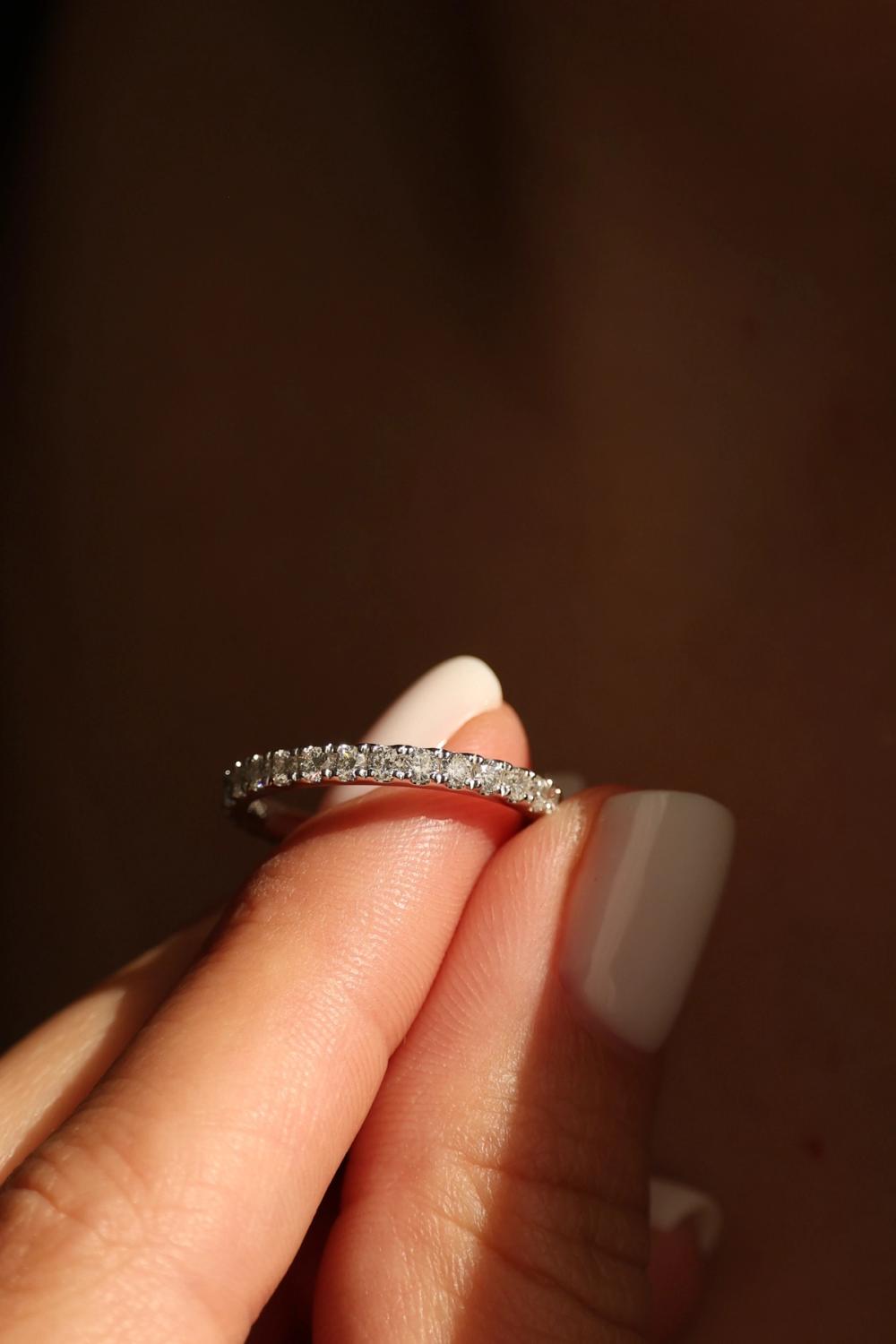
Above: Half-eternity Diamond Band in White Gold
When Industry Speaks Louder Than Research
This brings us to why the debate can be so intense. Academic researchers don’t have a financial incentive to defend mined diamonds. They analyze, measure, and publish.
For companies that rely on diamond extraction, however, the stakes are different. It’s understandable that they highlight studies that favor their position—and downplay the ones that don’t.
That doesn’t mean the information they share is false. But it’s often selective. That’s why we see industry articles that criticize lab-grown diamonds using “evidence” pulled from narrow slices of data, rather than whole-system comparisons.
So, Why Does the Research Feel So Contradictory?
When we look at the bigger picture, the research itself isn’t necessarily in disagreement—it’s often talking about different things.
When studies compare like with like and measure from the same starting point, the conclusions tend to line up:
- Mined diamonds have a high environmental impact when the full lifecycle—starting with land disturbance—is included.
- Lab-grown diamonds can have a very low footprint when produced with clean energy.
So the real issue isn’t a lack of truth—it's a lack of shared definitions and system boundaries.
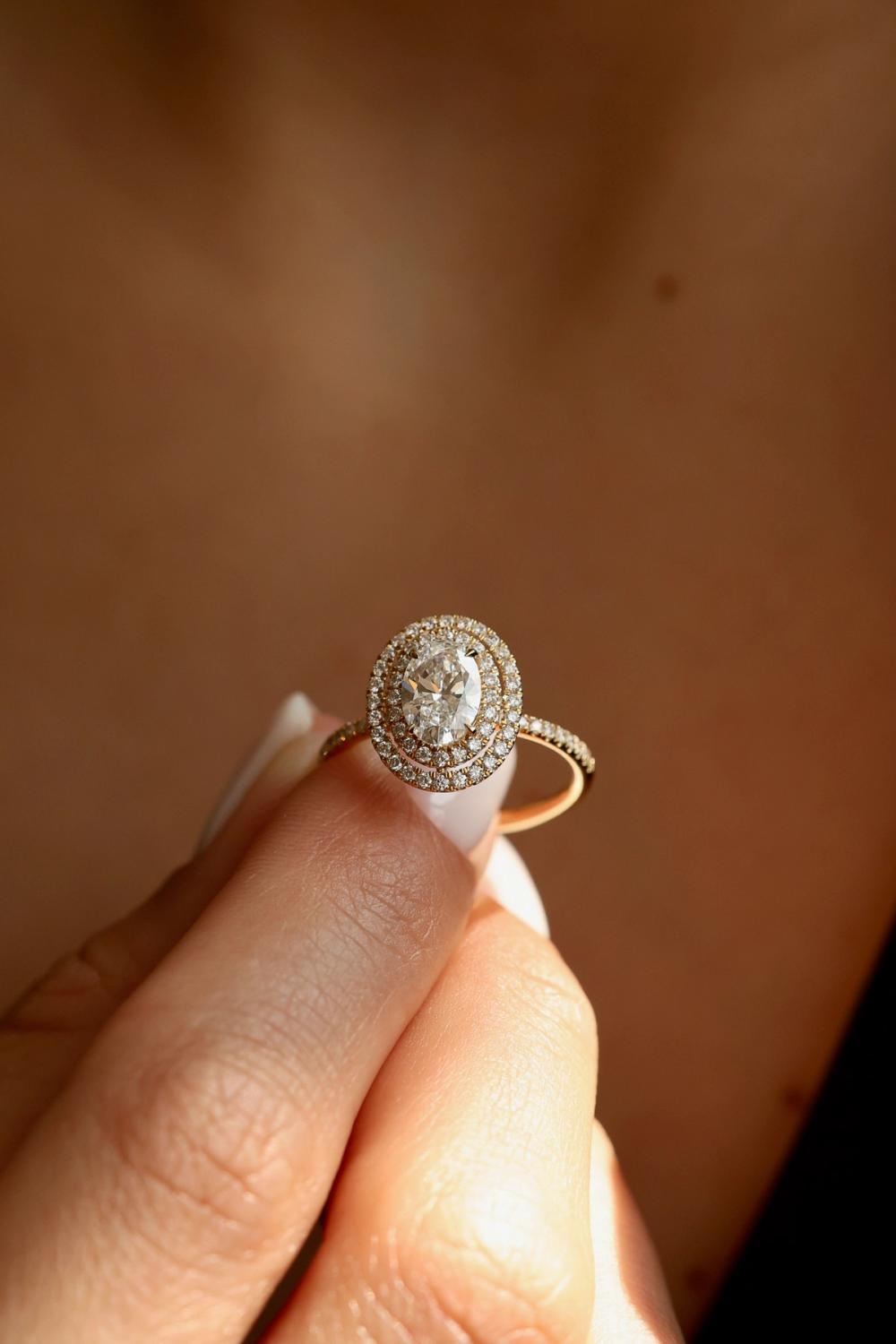
Above: Oval Diamond Ring with Halo
How Do You Make the Right Choice?
When the numbers seem to clash and the debate gets loud, it’s easy to feel lost. But the most important question is simply:
What’s included in the calculation?
Once you know that, things become much clearer. It becomes evident that mined diamonds inevitably affect land, water, ecosystems, and communities—no matter how efficient the mine is. And while lab-grown diamonds still use energy, their impact is significantly lower overall, even when the energy isn't fully renewable yet.
At Nangi, our goal is to make this knowledge accessible—not to argue in absolutes, but to provide clarity. We don’t believe in pressuring people—we believe in transparency, accountability, and jewelry that carries meaning without harm.
A diamond should symbolize love, not a dilemma.
Join the Nangi family!
Read similar posts



Join the Nangi family!
Subscribe to our newsletter to be the first to know when we release new one-of-a-kind pieces, and gain exclusive access to secret sales and events
Norsk side
Nangi Fine Jewelry © 2024